Talamus

Local-first, source-grounded memory that you and your AI agents share.
Talamus turns documents, repositories, URLs, and consented agent sessions into durable Markdown knowledge. It retrieves that knowledge with citations and bitemporal history, on your machine and with the LLM engine you already use. The engineering case study documents the architecture, measurements, trade-offs, and engineering role behind the project.
Install and connect Read the case study
pipx install "talamus[mcp]"
talamus setup
No account or hosted service is required. Plain search and recall are local and free; operations that invoke an LLM remain explicit.
See memory survive a fresh session
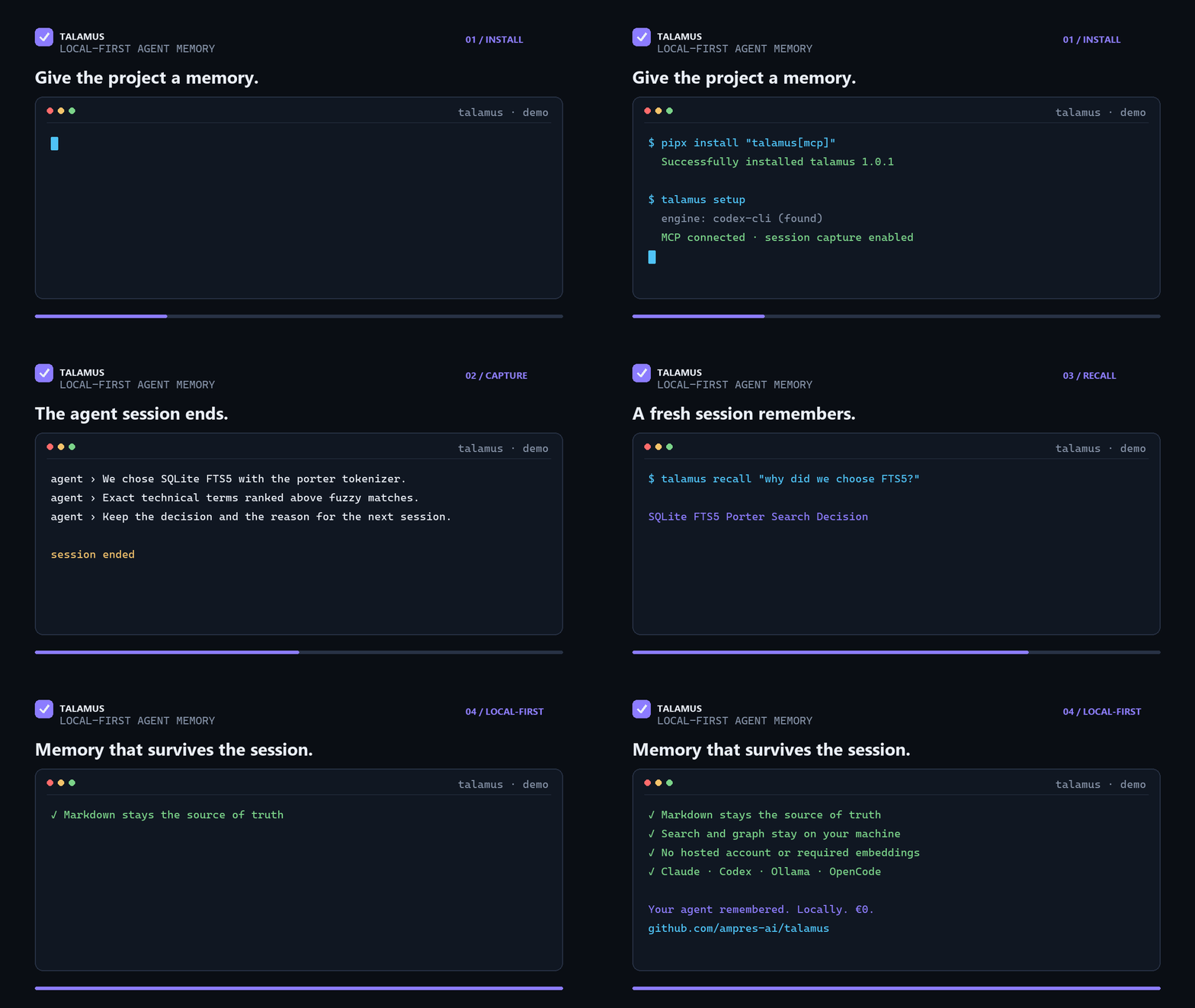
Talamus gives Claude Code, Cursor, Codex, OpenCode, and OpenClaw cited search, recall, history, provenance, and consent-gated writes, while the same brain stays readable as ordinary Markdown plus a local SQLite/FTS5 index.
What makes it different
- Time — inspect what the brain knew at an earlier date with
--as-of,history, andtimeline. - Meaning — induce and review an evidence-backed ontology instead of imposing a fixed folder tree.
- Verifiability — retain source provenance, cite retrieved notes, and gate proposed corrections behind review.
- Local-first control — keep the core usable without a cloud account, hosted database, or hidden paid call.
The measured benchmarks publish both wins and losses, with every public number traced to a committed result artifact.
Where to go next
- Quickstart — install and try it in 10 minutes.
- Local-first agent memory — evaluate the architecture, trade-offs, and no-LLM demo.
- Agent install guide — configure an agent without hidden side effects.
- Commands — browse the full
talamusCLI reference. - Benchmarks — inspect the measured numbers and artifacts.
- Architecture — see how the local-first pieces fit together.
- GitHub — inspect the source, report an issue, or contribute.
Talamus was created and is maintained by Giovanni “Angio” Crapuzzi under the Ampres project name. See the privacy policy and terms of use.